





















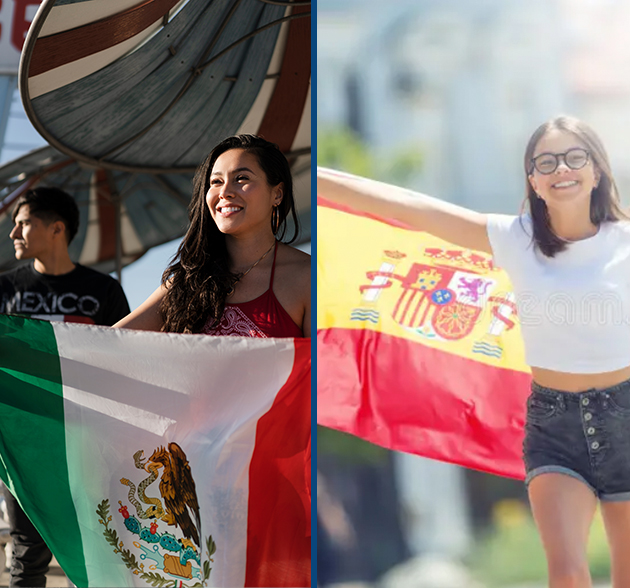
Spaniard vs Mexican: Language, History, and Cultural Identity Explained
Table of Contents
Summary
When we talk about the differences between Spaniards and Mexicans, we usually focus on language, history, and culture, which are the obvious separates between these two national identities. But the two share a long and deep historical root that complicates our understanding of each identity. Additionally, both groups have a claimed identity that they defend. This blog post goes a long way toward understanding what each group stands for and defends. The idea that either can claim the other’s historical territory is nonsense.
1.Language: Spaniard vs Mexican
The clearest difference between Spanish people and Mexicans is their language. Even though both groups speak Spanish, there are crucial differences between the Spanish spoken in Europe (from Spain) and the Spanish spoken in Mexico.
Key Differences in Language:
Pronunciation:
The "th" sound is used for "c" and "z" before "e" and "i" in Spain (known as "ceceo"). In Mexico, these letters are pronounced with an "s" sound.
Mexico: Mexicans usually have a softer "s" sound, and they tend to pronounce words in a much more flowing manner.
Vocabulary:
In Spain, the word for car is "coche," while the term for computer is "ordenador."
In Mexico, "carro" is the common term for car, and "computadora" is the term used for computer.
Tense Usage:
Spanish speakers in Spain often employ the present perfect (e.g., "he comido" – I have eaten) to refer to past actions that have a bearing on the present. In other words, they use the present perfect to talk about pretty much the same kinds of actions that we use it for in English. In contrast, these same Spanish speakers are much more likely to use the preterite (e.g., "comí" – I ate) to talk about past actions that don't have much to do with the present.
Mexicans usually utilize the simple past (e.g., "comí" – I ate) in like contexts.
Mexico's Spanish is a distinct form of pronunciation, vocabulary, and grammar from the Spanish spoken in Spain.
2.Cultural Identity: Spaniard vs Mexican
The identity of the Mexican people is a mixture of Spanish heritage and indigenous roots. Although Spaniards come from a predominantly European cultural background, Mexicans have a strong identification with both their Spanish colonial history and their indigenous roots, which are central to Mexican culture.
Key Aspects of Cultural Identity:
Spaniard Culture:
People from Spain generally feel a strong connection to their European ancestry and to such factors as Catholicism, family values, and traditional forms of entertainment, including Flamenco and bullfighting.
Mexican Culture:
Indigenous traditions form the root of Mexican identity, providing a foundation for the celebrations of Día de Muertos, which—not just in Mexico but across the world—has become a symbol for the living and the dead coming together.
Many Mexican families have elaborate, colorful ofrendas (altars) for their departed, replete with the kinds of items—like favorite foods or drinks—that would make the earthly life nicer. (Indeed, I saw an altar for a beloved stuffed rabbit; the late toy would have not been complete without the accompaniments of some kind of edible play food.)
Although both cultures have a Spanish colonial past, the particularities of the Mexican culture set it apart in a number of ways. Mexican culture is astoundingly distinct. Frequently, it engages the European and indigenous Mexican values in the most provocative ways.
3.Historical Background of Spain and Mexico
The histories of both nations are shaped by Spain’s 300 years of colonial rule over Mexico. Yet, the countries took different paths after independence.
Spain:
Colonial Empire: Spains was a major colonial force starting in the 15th century, with a wide sweep of territories across the Americas, Africa, and Asia. Its culture conveys the longings of an imperial power shaped by the reign of monarchies, by the rule of royal courts, and by the many influences of Europe.
Contemporary Spain: At present, Spain ranks among the impressive roster of modern countries in the European Union. It is a nation celebrated for its incredible diversity, showcased in everything from language to art to architecture to the almost dizzying array of familial, culinary, and festive occasions that fill its calendar.
Mexico:
Freedom from Spanish Rule: In 1810, Mexico achieved independence, and since then, it has experienced a slow but steady cultural and political evolution, intertwining Spanish with indigenous and Mayan cultures.
The Cultural Revolution occurred after Mexico gained independence. Mexico sought to solidify its national identity and to celebrate not only its Aztec roots but also its Mayan ruins, along with Catholic traditions shaped by Spanish colonialism.
4.The Influence of Spanish on Mexican Culture
Spanish culture undeniably influences Mexican culture, particularly in language, food, religion, and social customs.
Key Influences of Spanish on Mexico:
The main language spoken in Mexico is Spanish, but Mexican Spanish has taken many words from the indigenous languages in the country.
Dominant religion in Mexico: Catholicism, introduced by the Spanish. Its deep influence can be felt in many aspects of Mexican culture; for example, take the religious festivals like Semana Santa and Day of the Dead.
Cuisine: The Mexican culinary art combines Spanish techniques with those of the ancient Mayan and Aztec cultures, as well as with those of Mestizos. Popular dishes like the taco, tamale, and mole have made Mexican cuisine a worldwide favorite.
5.Key aspects in identity that qualify the difference between nations are as follows:
Key Differences in National Identity Spaniards and Mexicans share a common Spanish language heritage, but their national identities differ in key aspects. Key Differences in National
Identity: Unlike Mexicans, who have a strong mestizaje identity, Spaniards are proud of their European identity and see little reason to claim mestizaje or any Hispanic identity. In fact, a recent study by the Pew Research Center found that 39% of Spaniards identify as European. The median identity among those surveyed in seven Latin American countries was 25%.
Conversely, Mexicans have a very strong sense of identification with their indigenous roots, Mestizo heritage, and the many challenges and triumphs associated with winning independence from Spain.
Conclusion
Knowing the difference between Mexicans and Spaniards takes a bit of understanding. Both groups share a history of Spanish colonialism, but they diverged long ago—in terms of language, for one, because it was around 1810 that the Spaniards and their Mexican colonial subjects began to be governed by different constitutions.
The constitution in Spain guaranteed certain rights, and the Mexicans were given provisions in their constitution that were very much like what the Spaniards had, except the Mexicans had more freedom in key areas like religion and in the rights of being tried by juries.
FAQs
Question 1: What distinguishes a Spaniard from a Mexican?
Question 2: What are the differences between Spanish and Mexican Spanish?
Question 3: In what ways did Mexican culture shape Spain?
Question 4: Are Spaniards and Mexicans mutually comprehensible?
Question 5: In what ways do identity and history mold the language?
Key Takeaways
- Identity in Mexico is a mix of Spanish and indigenous heritage.
- Spaniards and Mexicans communicate in the same tongue but have different dialects.
- The culture of Mexico is a blend of both Spanish and indigenous influences.
- Cultural identities of both countries have been shaped by historical events.